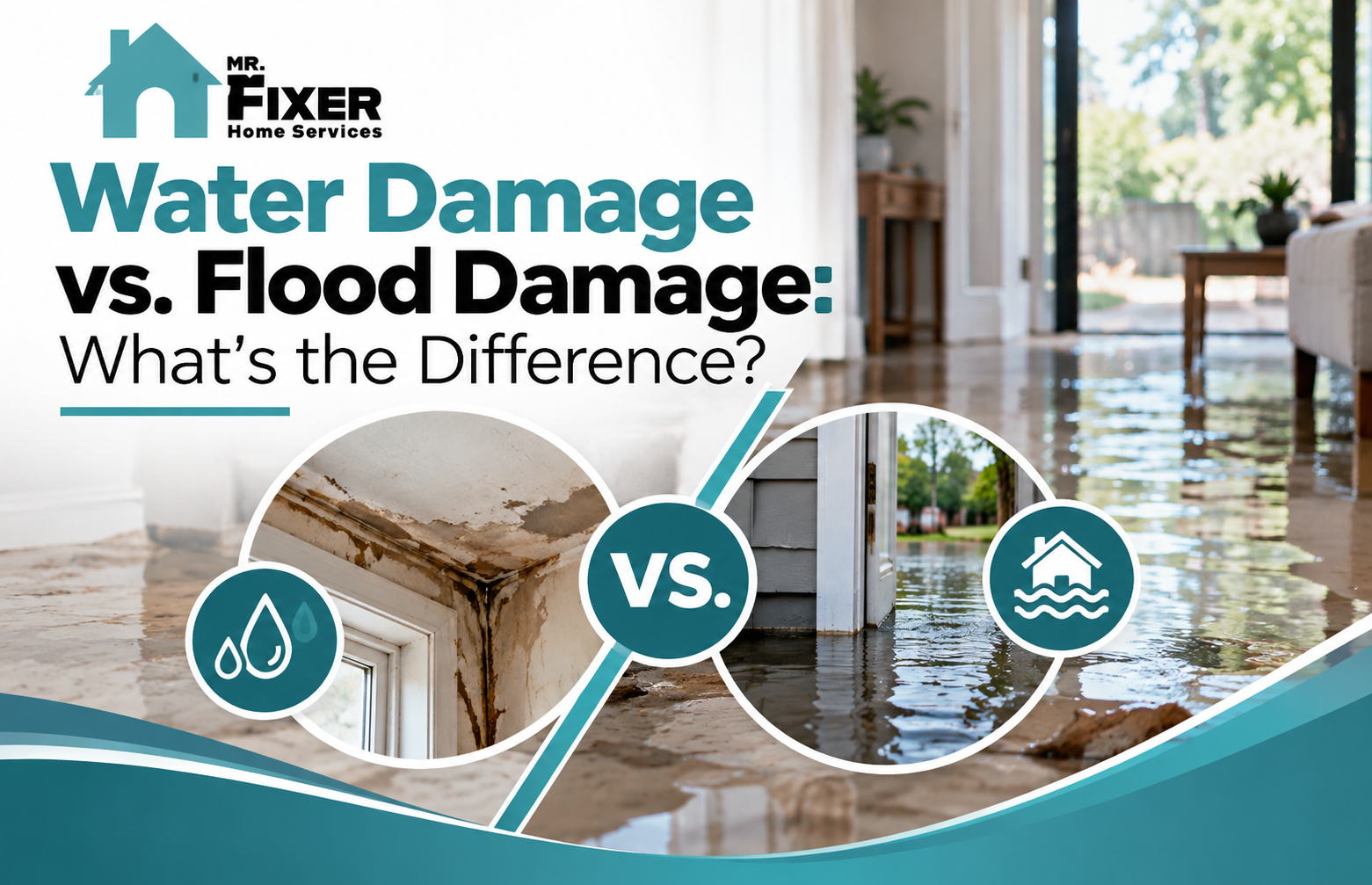
Water damage and flood damage can both leave your home wet, damaged, and in need of immediate attention. However, they are not necessarily the same thing.
Understanding the difference matters because the source of the water, how it entered your home, the type of damage it caused, and your insurance coverage can all affect how the situation should be handled.
If you’ve discovered standing water, soaked drywall, damaged flooring, or moisture in your home, the first priority is to address the source and prevent further damage.
What Is Water Damage?
Water damage generally refers to damage caused by water entering or escaping from a plumbing system, appliance, roof, HVAC system, or another source within or around the home.
Common examples include:
- A burst or leaking pipe
- An overflowing toilet
- A leaking water heater
- A failed washing machine hose
- A dishwasher leak
- A refrigerator water-line leak
- A plumbing fixture leak
- Roof leaks
- Water entering through damaged building components
The source of the water is an important part of determining how the damage should be addressed.
What Is Flood Damage?
Flood damage generally involves water that originates from outside the home and enters the structure after accumulating or covering normally dry land.
Examples can include:
- Heavy rainfall
- Storm-related flooding
- Overflowing rivers or streams
- Rising water from surrounding areas
- Coastal flooding
- Storm surge
- Surface water entering a property
Flooding can affect much more than one room. Depending on the event, water may enter through doors, windows, foundations, crawl spaces, garages, or other openings.
Insurance policies can use specific definitions of “flood,” so homeowners should review their individual policy rather than assuming every type of water intrusion is covered the same way.
Water Damage vs. Flood Damage: The Key Difference
The easiest way to think about the distinction is to consider where the water came from.
| Water Damage | Flood Damage |
|---|---|
| Often originates inside the home or from a localized source | Typically originates outside the home |
| Burst pipes and appliance leaks are common examples | Heavy rain, rising water, and overflowing waterways are common examples |
| May affect one room or a limited area | Can affect multiple areas or surrounding properties |
| Plumbing and appliance failures are common causes | Weather and surface-water events are common causes |
| Insurance coverage depends on the specific policy and cause | Flood insurance may be required for certain flood-related losses |
The distinction isn’t always obvious, especially when stormwater enters a home through several different pathways.
Common Causes of Water Damage
Burst or Leaking Pipes
A damaged supply line or burst pipe can release a large amount of water in a short period of time.
Water may spread beneath flooring, inside walls, or into lower levels of the home.
Appliance Leaks
Washing machines, dishwashers, refrigerators, and water heaters can all become sources of water damage.
A small leak that goes unnoticed can eventually damage flooring, cabinets, drywall, and surrounding materials.
Plumbing Problems
Leaking faucets, toilets, drains, and plumbing connections can cause localized damage.
Some plumbing leaks are easy to notice, while others may remain hidden behind walls or beneath floors.
Roof Leaks
Damaged shingles, flashing, vents, or other roofing components can allow rainwater to enter the structure.
Roof leaks can lead to staining, wet insulation, damaged drywall, and moisture problems if they aren’t addressed.
Common Causes of Flood Damage
Heavy Rainfall
Intense or prolonged rainfall can overwhelm drainage systems and cause water to accumulate around a property.
Rising Water
Rivers, streams, drainage channels, and other waterways can overflow during severe weather.
Storm Surge
Coastal properties may experience flooding associated with storm surge during major storms.
Surface Water
Water flowing across surrounding land can enter garages, crawl spaces, basements, and living areas when drainage capacity is exceeded.
Why the Difference Matters for Insurance
One of the biggest reasons homeowners should understand the distinction is insurance coverage.
A standard homeowners insurance policy may cover certain types of sudden and accidental water damage, but flood damage is generally treated differently and may require separate flood insurance.
Coverage can vary based on:
- The cause of the damage
- The type of insurance policy
- Policy exclusions
- Deductibles
- The location of the property
- How the water entered the home
- The specific circumstances of the loss
Don’t assume that a policy will cover a particular type of water damage simply because the damage occurred inside the house.
If you’re dealing with significant water damage, contact your insurance provider and ask what documentation and procedures they require.
What Should You Do When Water Enters Your Home?
When water damage occurs, acting quickly can help limit additional damage.
1. Address the Source
If it is safe to do so, stop the source of the water.
For example, you may need to shut off the home’s main water supply when dealing with a plumbing leak.
2. Put Safety First
Standing water can create electrical and structural hazards.
Avoid entering areas where electrical systems may have been exposed to water. If there is significant flooding or an immediate safety concern, leave the area and contact the appropriate professionals.
3. Document the Damage
Take photographs and videos of affected areas and damaged belongings when it is safe to do so.
This documentation may be useful when communicating with your insurance company and contractors.
4. Begin Water Removal
Standing water should be removed as soon as possible using appropriate equipment and professional methods when necessary.
The longer materials remain wet, the greater the opportunity for additional damage and microbial growth.
5. Dry the Affected Area
Removing visible water is only the beginning.
Moisture can remain inside:
- Drywall
- Flooring
- Subfloors
- Cabinets
- Insulation
- Baseboards
- Wall cavities
Professional moisture measurements can help identify areas that still require drying.
Why Fast Response Matters
Water can move quickly through building materials.
A leak that initially appears to affect only one area can spread beneath flooring or into walls.
Prompt action can help reduce the amount of material that needs to be removed and may help prevent additional damage.
However, not every situation should be treated as a simple cleanup project. Contaminated water, extensive flooding, sewage backups, and water affecting electrical systems require additional precautions.
What About Mold After Water Damage?
Moisture that remains in building materials can create conditions that support mold growth.
That’s one reason drying should begin as soon as reasonably possible after a water event.
If materials remain wet or there is visible mold growth, a professional can help determine what materials can be dried and restored and what materials may need to be removed.
Can Water-Damaged Materials Be Saved?
Sometimes.
The answer depends on factors such as:
- How long the material was wet
- How much water was involved
- The source and cleanliness of the water
- The type of material
- The extent of the damage
- Whether the material can be thoroughly dried
Hard surfaces and certain building components may be restorable, while saturated drywall, insulation, flooring, or other porous materials may require removal in some situations.
A professional assessment can help determine the appropriate approach.
Does Floodwater Require Different Precautions?
Yes.
Floodwater can contain contaminants picked up from soil, roads, sewage systems, chemicals, and other sources.
Because of this, flood cleanup should not automatically be treated the same way as a clean-water plumbing leak.
If floodwater has entered your home, use appropriate protective measures and consider professional remediation, particularly when the water is contaminated or the affected area is extensive.
Water Damage or Flood Damage: When Should You Call a Professional?
Consider professional help when:
- There is significant standing water
- Water has entered walls or ceilings
- Flooring or subfloors are saturated
- The source of the water is unknown
- Sewage or contaminated water is involved
- Floodwater has entered the home
- Electrical systems may have been exposed
- You notice persistent moisture or musty odors
- The affected area is too large to dry effectively with household equipment
A professional can evaluate the affected areas, identify hidden moisture, remove water, establish a drying plan, and determine what materials may require removal or restoration.
The Bottom Line
Water damage and flood damage aren’t always the same thing.
Water damage can result from plumbing leaks, appliance failures, roof problems, and other localized sources. Flood damage generally involves water originating from outside the home and entering after water accumulates or rises.
The distinction can affect cleanup procedures, restoration decisions, and insurance coverage, so identifying the source of the water is an important first step.
If your home has experienced water intrusion, don’t wait for the visible water to disappear before addressing the problem. Moisture can remain hidden beneath floors, behind walls, and inside other building materials.
Mr. Fixer Home Services can help homeowners evaluate water-related damage and determine the next steps toward getting the property dry, safe, and back to normal.
Frequently Asked Questions
Is flood damage the same as water damage?
No. Flood damage generally refers to water originating outside the home and entering after flooding or rising water, while water damage can result from many localized sources such as plumbing leaks or appliance failures.
Does homeowners insurance cover water damage?
It can, depending on the cause of the damage and the terms of the policy. Coverage varies, so homeowners should review their policy and contact their insurance provider after a loss.
Does homeowners insurance cover flood damage?
Standard homeowners insurance generally does not provide the same coverage for flooding as dedicated flood insurance. Coverage depends on the specific policy and circumstances.
How quickly should water damage be cleaned up?
Water removal and drying should begin as soon as reasonably possible. Prompt action can help limit additional damage and reduce the amount of time building materials remain wet.
Can I clean up water damage myself?
Small, clean-water leaks may sometimes be manageable by homeowners. Larger losses, contaminated water, sewage backups, flooding, hidden moisture, or water affecting electrical systems should be evaluated by qualified professionals.
Can floodwater cause mold?
Yes. Floodwater can leave building materials wet for extended periods, creating conditions that support mold growth. Proper water removal and drying are important after flooding.
How do I know if water damage is hidden?
Signs can include musty odors, staining, swollen flooring or baseboards, bubbling paint, warped materials, or unexplained moisture. Professional moisture-detection equipment can also identify moisture that isn’t visible.
Should I remove wet drywall after water damage?
Not always. Whether drywall can be dried or needs removal depends on the type of water, how long it remained wet, the extent of saturation, and the condition of the material.
What should I do first after a flood?
Prioritize safety, avoid potentially contaminated or electrically hazardous water, document the damage when safe, contact your insurance provider if appropriate, and arrange professional assessment and water removal when necessary.