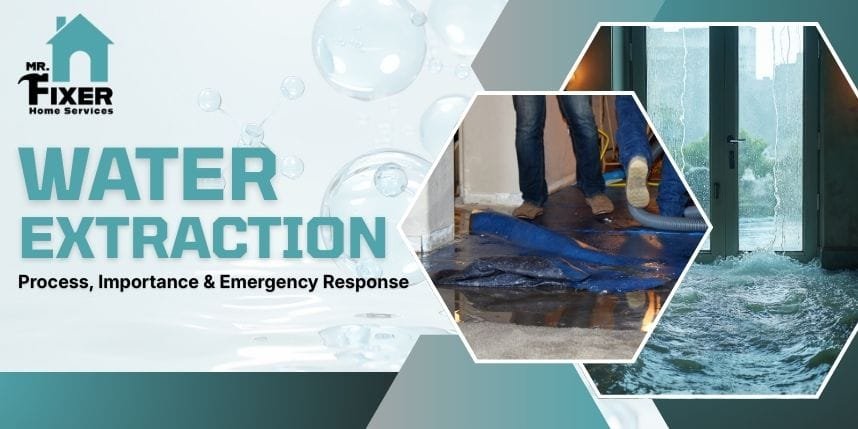
Water damage can occur without warning and often escalates faster than most property owners expect. Heavy rainfall, plumbing failures, appliance leaks, or flooding can quickly result in standing water inside a property. When this happens, water extraction becomes a critical step in limiting water damage and preventing long-term issues. Understanding what water extraction is, how it works, and why immediate action matters can help property owners make informed decisions during stressful situations.
This guide explains water extraction in detail, including the water extraction process, emergency water extraction scenarios, and the role of professional water extraction services in protecting residential and commercial spaces.
What Is Water Extraction?
Water extraction refers to the removal of unwanted or excess water from indoor spaces such as homes, offices, or commercial buildings. It is typically required after water damage events caused by flooding, leaks, sewage backups, or stormwater intrusion.
The primary objective of water extraction is to eliminate standing water before it penetrates deeper into floors, walls, and structural materials. If water remains trapped for extended periods, it can weaken building materials, create unhealthy conditions, and lead to mold growth.
Water extraction is often the first and most time-sensitive step in the broader water damage restoration process.
Why Water Extraction Is So Important
Water does not remain still once it enters a structure. It spreads quickly through porous materials, making early intervention essential. Delayed water extraction can result in damage that is significantly harder and more expensive to address later. For a complete breakdown explore our water damage restoration process step-by-step guide.
Prevents Structural Damage
Prolonged exposure to moisture can weaken flooring, drywall, insulation, and wooden framing. Over time, this can compromise the structural integrity of a building.
Reduces Mold and Bacterial Growth
Moist environments create ideal conditions for black mold and bacteria. In humid climates or monsoon-prone regions, mold growth can begin within a short period if water is not removed promptly.
Protects Indoor Air Quality
Standing water and trapped moisture can release contaminants into the air, affecting indoor air quality and potentially causing respiratory discomfort or health issues.
Limits Secondary Damage
Water extraction helps prevent secondary damage such as peeling paint, warped surfaces, staining, and lingering odors.
Common Causes of Water Damage Requiring Extraction
Water extraction services are needed in a variety of situations, some more sudden than others.
- Flooding caused by heavy rainfall or overflowing drains
- Burst or leaking pipes inside walls or ceilings
- Appliance malfunctions such as washing machines or water heaters
- Roof leaks during storms
- Sewage backups and drain overflows
- Firefighting water damage after a fire incident
In many urban areas where drainage systems are under pressure during heavy rains, emergency water extraction becomes especially common during monsoon seasons.
Read More: Common Causes of Water Damage to Be Aware Of
Understanding the Water Extraction Process
The water extraction process involves more than simply removing visible water. It is a systematic approach designed to address both surface water and hidden moisture.
Initial Assessment and Safety Evaluation
Before extraction begins, professionals assess the affected area to determine the source of water, the extent of damage, and potential safety hazards. Electrical risks and contamination levels are carefully considered.
Removal of Standing Water
Standing water is removed from floors, carpets, and other surfaces to prevent further absorption into materials. This step helps stabilize the environment and slows the spread of moisture.
Moisture Identification
Water often travels into areas that are not immediately visible, such as beneath flooring or behind walls. Identifying trapped moisture is essential to prevent ongoing damage.
Stabilization of Affected Areas
Once visible water is removed, the space is stabilized to support drying and restoration efforts. This phase helps reduce humidity levels and prepares the structure for further recovery steps.
The water extraction process must be thorough to ensure that no residual moisture remains that could cause problems later.
Emergency Water Extraction and When It Is Needed
Emergency water extraction is required when water damage poses an immediate risk to property or health. These situations demand urgent attention to minimize damage.
Situations That Require Emergency Water Extraction
- Rapid flooding that spreads across multiple rooms
- Sewage water intrusion with potential contamination
- Water reaching electrical systems or appliances
- Large volumes of water entering living or working spaces
- Structural weakening caused by prolonged water exposure
In emergency situations, time is critical. The faster water is extracted, the better the chances of preserving the structure and preventing further complications.
Water Extraction vs Drying vs Water Mitigation
These terms are often used together, but they represent different stages of damage control.
Water Extraction
This stage focuses on removing standing and excess water from the affected area.
Drying
Drying addresses residual moisture left behind after extraction. It ensures that materials return to safe moisture levels.
Water Mitigation
Water mitigation is the overall strategy that includes extraction, drying, and actions taken to prevent further damage.
Water extraction is the foundation of effective water mitigation, as drying cannot be successful if excess water remains.
Residential vs Commercial Water Extraction
While the goal of water extraction remains the same, residential and commercial properties present different challenges.
Residential Properties
Homes often contain materials such as carpets, furniture, and personal belongings that absorb water quickly. Residential water extraction focuses on protecting living spaces and minimizing disruption to daily life.
Commercial Properties
Commercial buildings may have larger floor areas, complex layouts, and critical equipment. Water extraction services in commercial settings prioritize business continuity, safety, and compliance with health standards.
Health Risks Associated With Delayed Water Extraction
Ignoring or delaying water extraction can create serious health risks, especially in enclosed spaces.
- Mold spores can trigger allergies and respiratory issues
- Bacteria from contaminated water can cause illness
- Poor indoor air quality may affect occupants over time
- Damp conditions can worsen asthma symptoms
These risks make prompt water extraction essential for maintaining a safe indoor environment.
Signs That Water Extraction Is Urgently Needed
Some water damage is obvious, while other signs are more subtle. Recognizing early indicators can prevent larger problems.
- Visible pooling or standing water
- Persistent damp or musty odors
- Discoloration on walls or ceilings
- Warping or bubbling of floors
- Increased indoor humidity levels
- Unexplained allergy symptoms indoors
When these signs appear, water extraction services should be considered without delay.
The Role of Professional Water Extraction Services
Professional water extraction services bring expertise, experience, and systematic processes to water damage situations. Their role is not limited to removing water but also includes preventing future complications.
Professionals understand how water behaves within structures and can identify hidden moisture that may otherwise be missed. They follow structured methods to ensure extraction is complete and effective.
Relying on experienced water extraction services helps property owners avoid incomplete water removal, which is one of the most common causes of recurring damage.
Why Speed Matters in Water Extraction
Water damage worsens with time. Within hours, water can seep into subfloors and walls. Within days, it can lead to microbial growth and material deterioration.
Fast action during water extraction helps limit the spread of damage and shortens recovery time. This urgency is similar to addressing waterlogging after heavy rains, where early drainage prevents widespread disruption.
Frequently Asked Questions-
1. What is residential water extraction?
Residential water extraction removes excess water from homes caused by flooding, leaks, or storms to prevent structural damage and mold growth.
2. When do I need water extraction in my house?
You need water extraction when water pools on floors, carpets, basements, or walls after floods, pipe leaks, roof damage, or appliance failures.
3. Can standing water damage my house?
Yes, standing water can weaken floors, walls, and foundations, cause mold growth, and damage electrical systems if not removed quickly.
4. How long can water sit in a house before causing damage?
Water can start causing damage within 24 hours, including swelling of materials, bad odors, and mold growth if not extracted promptly.
5. Does water extraction prevent mold growth?
Yes, quick water extraction reduces moisture levels, which helps prevent mold and mildew from developing inside walls and flooring.
6. Can water under floors or carpets cause structural damage?
Yes, trapped water can rot wood, loosen tiles, damage subfloors, and weaken the structure if not professionally extracted.
7. Is water extraction necessary after minor flooding?
Even minor flooding can leave hidden moisture. Water extraction helps remove trapped water that could cause long-term damage.
8. Can I do water extraction myself at home?
Small spills can be handled, but large water damage requires professional equipment to remove hidden moisture safely and completely.
9. Does water extraction help with insurance claims?
Yes, timely water extraction helps limit damage and supports insurance claims by showing immediate action was taken to prevent further loss.
10. How long does residential water extraction take?
Most residential water extraction jobs take a few hours, depending on water amount, affected areas, and access to the damaged spaces.
Final Thoughts
Water extraction plays a vital role in protecting properties from the escalating effects of water damage. Whether caused by flooding, leaks, or unexpected emergencies, timely water extraction helps preserve structures, safeguard health, and prevent long-term issues.
Understanding the water extraction process, recognizing when emergency water extraction is required, and knowing the value of professional water extraction services empowers property owners to respond effectively. In any water damage situation, quick and informed action can make all the difference.