Finding mold in your toilet bowl can be frustrating and a little embarrassing. You clean your bathroom often, but somehow dark spots and slimy rings keep coming back. The good news is that black mold is prevalent and very manageable when you understand what causes it and how to remove it properly.
This detailed guide covers everything from why mold grows in your toilet to the best ways to eliminate it and stop it from returning. It also includes prevention strategies and helpful cleaning tips so your toilet stays fresh, clean, and mold-free for the long term.
Why Does Mold Grow in My Toilet Bowl
If you have ever wondered why your toilet bowl grows mold even when the rest of your bathroom looks spotless, you are not alone. Mold thrives in a combination of moisture, organic matter, and humidity.
A toilet bowl naturally provides all three, which is why it is one of the first places mold will appear when conditions are right.
1. Standing Water Provides the Perfect Environment
Your toilet bowl is always filled with water. Even though this water looks clean, it still contains microscopic particles that mold can feed on.
When water sits for long periods without being flushed, these particles settle and create the perfect environment for mold growth.
2. Mold Spores Are Already Present in the Air
Mold spores exist naturally in the air of almost every home. When they land inside a damp and shaded environment, they begin to grow.
Most toilet bowls are dark on the inside and rarely dry out, which makes it very easy for mold spores to multiply.
3. Hard Water and Mineral Deposits Feed Mold
Homes with hard water experience higher mineral buildup in the bowl and inside the tank. Minerals such as calcium and iron stick to the surface and create a thin film.
Mold attaches to these minerals and grows even faster because the deposits hold moisture.
4. Poor Ventilation Increases Humidity
Bathrooms that do not have proper ventilation stay moist for hours after a shower. High humidity slows down drying and keeps surfaces warm and wet, which encourages mold to spread across grout, the shower curtain, and inside the toilet bowl.
5. Dirty Toilet Tanks Spread Mold Back Into the Bowl
Many people clean only the toilet bowl and ignore the tank. If the tank has mold growing on the sides, the spores will mix with the water and repeatedly flow into the bowl after every flush. This results in mold rings reappearing even after deep cleaning.
6. Irregular Toilet Use and Long Gaps Between Flushing
Toilet bowls that are not used often, such as guest bathroom toilets or vacation home toilets, develop mold faster.
The water becomes stagnant, which allows mold to grow and spread. A toilet that is flushed several times a day is less likely to develop mold.
What Causes Mold in Toilet Bowl
Mold in a toilet bowl is usually caused by a combination of moisture, nutrient buildup, poor airflow, and irregular cleaning. Some common reasons include:
- Continuous moisture inside the bowl
- Humid bathrooms with no fan or open window
- Mineral deposits from hard water
- Bacteria and organic matter in standing water
- Presence of mold inside the toilet tank
- High humidity levels in warm climates
- Water leaks that keep the bowl constantly wet
All these factors create a breeding ground for mold and allow it to return even after cleaning.
Health Risks Associated With Toilet Mold
Although toilet mold is usually less harmful than mold growing on walls or inside HVAC systems, it can still cause issues. Mold spores can irritate sensitive individuals and may trigger symptoms such as sneezing, coughing, skin irritation, and mild breathing discomfort.
People with asthma or weakened immune systems may experience more noticeable reactions. Cleaning mold quickly and keeping your toilet dry and disinfected reduces these risks.
How to Get Rid of Mold in Toilet Bowl
The main reason you are here is to remove the mold completely. The following methods are effective for cleaning different types of mold, including black mold, pink mold, and orange slime rings.
Before starting any cleaning process, wear gloves and keep your bathroom fan on for ventilation.
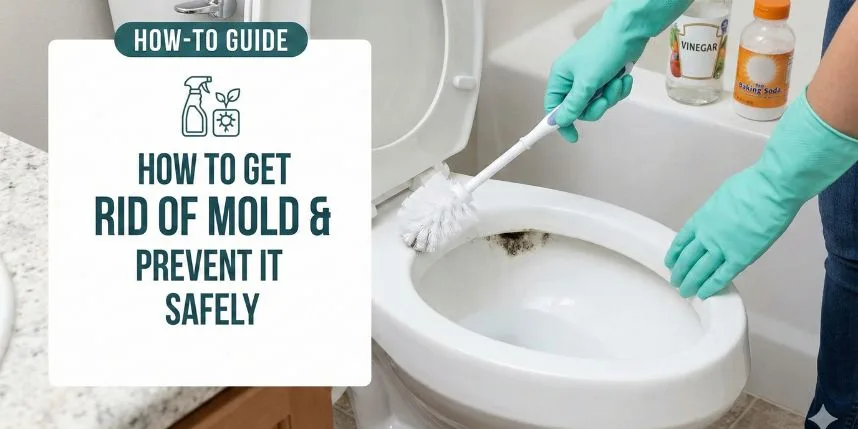
1. Remove Mold Using Vinegar and Baking Soda
This is one of the safest and most eco-friendly ways to clean a toilet.
Steps
- Pour one cup of white vinegar into the toilet bowl.
- Swirl it around using a toilet brush so it coats the entire surface.
- Add one cup of baking soda into the bowl.
- Pour another cup of vinegar on top.
- Let the mixture fizz for ten minutes.
- Scrub the toilet thoroughly, including under the rim.
- Flush to rinse everything clean.
This method works well for mild to moderate mold stains.
2. Use Bleach for Stubborn Mold
For deep, dark or old mold stains, bleach is the most powerful option.
Steps
- Pour half a cup of liquid bleach into the bowl.
- Let it sit for ten to fifteen minutes.
- Scrub the bowl using a toilet brush.
- Flush thoroughly.
Never mix bleach with vinegar or ammonia. Use bleach alone for safety.
3. Clean the Toilet Tank to Stop Mold From Returning
Even if your bowl looks clean, a moldy tank will contaminate it again.
Steps
- Turn off the water supply to the toilet.
- Remove the lid of the tank carefully.
- Pour two cups of white vinegar directly into the tank.
- Let it sit for one hour with the water still inside.
- Use a long-handled brush to scrub the sides.
- Turn the water supply back on and flush repeatedly.
If the tank has severe mold buildup add a quarter cup of bleach, let it sit for ten minutes and rinse thoroughly after scrubbing.
4. Borax Powder Method
Borax is a powerful cleaner that kills mold and removes stains.
Steps
- Sprinkle one-quarter cup of borax into the toilet bowl.
- Add two cups of hot water for activation.
- Let it sit for twenty minutes.
- Scrub the bowl and flush.
For extra cleaning power combine borax with vinegar.
5. Use Enzymatic Cleaners for Organic Mold and Slime
Enzymatic cleaners break down organic waste and can be very effective for toilets with persistent slime or biofilm.
Steps
- Apply the enzymatic cleaner around the inside of the bowl.
- Let it sit for at least one hour.
- Scrub the area and flush.
These cleaners are safe for toilets and septic systems.
6. Remove Black Mold Under the Rim
Mold often hides under the toilet rim, where it stays dark and moist.
Steps
- Apply a cleaning gel or bleach-based toilet cleaner under the rim.
- Let it sit for ten minutes.
- Scrub using a curved brush designed for rim cleaning.
- Flush the toilet.
Repeat this weekly to prevent mold from building up again.
How to Prevent Mold in Toilet Bowl
After removing mold, you need to prevent it from coming back. Prevention is easier and less time-consuming than deep cleaning.
1. Flush the Toilet Regularly
Frequent flushing keeps water fresh and prevents mold spores from settling. This is especially important for toilets that are not used daily.
2. Keep the Bathroom Ventilated
Turn on your bathroom exhaust fan every time you shower and let it run for at least fifteen minutes afterward. If your bathroom has a window, open it to reduce humidity.
3. Clean the Toilet Weekly
A weekly cleaning routine prevents mineral buildup and organic waste from settling. Use a mild cleaner or a vinegar rinse.
4. Add Vinegar to the Tank Once a Month
Pour half a cup of white vinegar into the toilet tank once a month to prevent mold from forming inside. Allow it to sit for at least thirty minutes before flushing.
5. Fix Water Leaks and Drips
If you notice water running continuously or leaking from the tank, fix the leaks quickly. If leaks are ignored, they can lead to bigger issues and increase the overall cost to repair water damage in Texas, especially when moisture spreads beyond visible areas.
6. Use Toilet Bowl Tablets Carefully
Some tablets help reduce mold, but strong chemical tablets can damage toilet parts. Choose safe, non-corrosive tablets or use vinegar tablets designed for mold prevention.
7. Keep the Toilet Lid Open Occasionally
Keeping the toilet lid open for a few minutes after cleaning allows the bowl to dry faster. A dry bowl is less likely to grow mold.
8. Maintain Low Humidity in the Bathroom
If your bathroom always feels damp, consider using a small dehumidifier. Lower humidity reduces condensation and limits mold growth.
When to Call a Professional
Even though most cases of toilet mold can be handled with home cleaning, there are situations when you should consider professional help. If mold is spreading into the toilet tank repeatedly, growing on walls, spreading across grout or causing strong odors even after cleaning, there may be a larger moisture issue such as hidden leaks, plumbing problems or ventilation issues. A professional inspection can help identify the root cause and provide a long-term fix for bathroom water issues.
Final Thoughts
Mold in a toilet bowl is annoying but completely manageable once you understand what causes it and how to treat it correctly. With simple cleaning steps, regular flushing, proper ventilation and monthly maintenance, you can eliminate mold and prevent it from returning.
Start with the method that matches your situation and follow the prevention tips consistently to keep your toilet fresh, clean and mold-free all year.
Frequently Asked Questions
Why does mold keep coming back in my toilet?
Mold returns when moisture, mineral buildup, or spores in the toilet tank are not fully removed. High humidity and infrequent flushing also encourage regrowth.
Can black mold in a toilet make you sick?
It can irritate people with allergies or asthma, but it is usually not dangerous if cleaned promptly.
How do you keep toilets clean in humid weather?
Use bathroom ventilation, flush regularly, clean weekly, and add a little vinegar to the tank once a month to slow mold growth.
Why is there black mold under the toilet rim
Moisture stays trapped under the rim, which creates the perfect environment for mold spores to grow.
What kills toilet mold the fastest
Bleach works the fastest on stubborn mold, while vinegar and baking soda are effective for regular cleaning.
How do I stop mold from forming in the toilet tank
Add vinegar monthly, keep the tank clean, and ensure there are no leaks or standing water inside.
Does flushing the toilet more often prevent mold
Yes. Frequent flushing keeps water fresh and reduces the chances of mold settling and multiplying.
Is pink mold in the toilet dangerous?
Pink mold is usually bacteria, not true mold, and it is generally not harmful. It should still be cleaned to prevent buildup.